Reclaim and Filtration Process
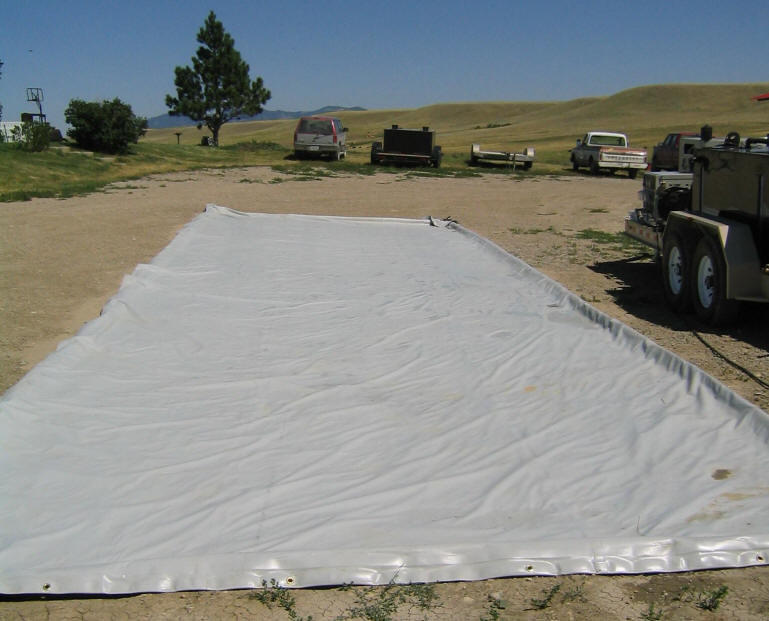
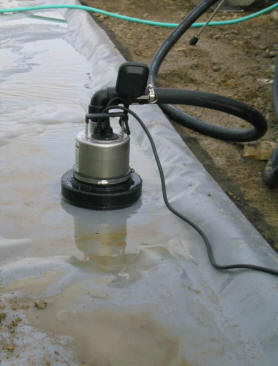
Effluent from the washing process lands on the impermeable mat and collects
at the lowest point, where the reclaim pump is located. This pump moves the water into a collection
tank onboard the trailer, where it accumulates until sufficient quantity exists
to pump a consistent flow. At that time,
a float-activated pump engages, transferring the liquid through a hydrocyclone,
separating the heavier solids from the lighter liquid. The “underflow” of this hydrocyclone is
deposited into a holding tank, where it accumulates until it can be dumped in
an appropriate area; the “overflow” passes into a settling tank, where
remaining particles of soil have the opportunity to separate out. As the water in the supply tank is depleted,
a pump may be manually engaged that transfers this settled water through a
series of bag-type filters, and deposits it into the supply tank for
reuse. All remaining seeds, organic
matter, and particles larger than 25 microns are captured within these easily replaceable
filters bags. Process
monitoring gauges are incorporated into the control panel, indicating system
pressure and pre-filter pressure.
As the supply water is consumed, it will be necessary to process the
reclaimed water and transfer it back into the supply tank. It is advantageous to allow the effluent to
settle in the center, or “overflow” cell, as long as possible, to allow heavier
solids to settle to the bottom of the tank.
This minimizes the amount required to be captured by the filtration
system, and extends the life of the filters.
When it becomes necessary to refill the supply tank, simply switch the
filtration pump switch to “On”, and transfer the effluent through the filters
and into the supply tank. This pump is
also float controlled, and will shut itself off when the fluid in the center
cell has been removed.
The filtration and reuse of the water allows the system
to be used for extended periods of time, dependant on the dirt loading.
Total cleaning
time per vehicle depends on the size of the vehicle or equipment being washed
and the degree of soils to be removed.